AI-factory components — integrated, not just listed
Start with the use case 3
Clip a current sensor on one phase conductor per machine — run/idle/down state, cycle counts and energy trends on a live dashboard the same week. Works on any machine of any age; nothing is cut, no PLC is touched.
A 3-angle AI camera gate on the line: scratches, discoloration, missing material, dimension defects. Edge inference on the station — only flagged frames leave the box. The same station in Cognex/Keyence parts runs $9,000–30,000+.
Meter every major machine or feeder and get kWh per shift, per machine, per product batch. Choose trend-grade (local API, fastest) or MID billing-grade (survives an audit) per point.
Recipes — cloneable cells 2
Cable QC Camera Station
3-angle AI camera inspection gate for cable/wire lines — scratches, discoloration, missing material, dimension defects. Target BOM $500–1,500: 5–10× under a Cognex/Keyence smart-camera setup for the same line.
- Photo-stand rig (validate angles + lighting on real defects)
- T-slot frame on the line
- Enclosed inspection gate: swappable pass-through inserts, one PoE cable out, pass/uncertain/defect LED
Machine Current-Sensing Node
Clip-on CT sensing for run/idle/down state, cycle counting and energy on any machine — no wiring into the machine circuit. Bench-verified; from ~$11/machine DIY to ~€110/machine no-firmware.
| Demo | €60–80 | Shelly EM — clamp on, poll local HTTP, live in minutes |
| Pilot | ~€110/machine | Shelly Pro 3EM — DIN rail, LAN, per-phase power, no firmware work |
| Scale DIY | ~$11/machine | ESP32 + SCT-013 — ESPHome → MQTT; 100 machines ≈ $1.1k in hardware |
Sense 12

SCT-013 Split-Core CT Clamp
Clip-on current transformer (30/50/100A). Run/idle/down + cycle detection on any machine by clamping one phase conductor — nothing cut or disconnected.
5 gotchas
- Clamp ONE conductor — around a full cord (L+N) the fields cancel and you read zero
- Buy the 1 V output variant (internally burdened = safe); 50 mA variants must never be open-circuited on a live wire
- 100A ≈ motors to ~50–55 kW @380V; 13 mm window fits ≤ ~35–50 mm² cable — 200A-class (SCT-019/024) above that
- Install on the load side of the contactor, LINE side of any VFD — never between VFD and motor
- 30A variant for small machines — better low-current resolution
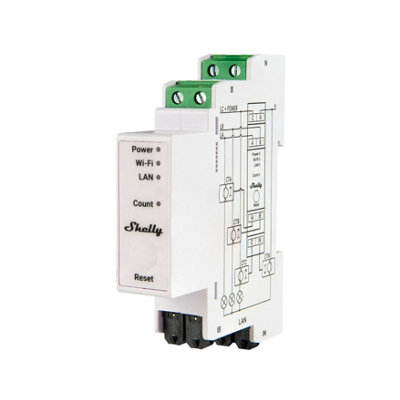
Shelly EM / Pro 3EM Energy Monitor
Ready-made CT energy monitors with a local API. Pro 3EM = 3-phase DIN-rail meter, 1% accuracy, per-phase V/A/PF in real time, 60-day on-device history.
3 gotchas
- True kWh needs the L/N voltage tap at the meter terminals — the current side stays clip-on
- CT polarity matters for power direction
- Metal cabinets kill WiFi — use the Pro models on LAN for deployments

PZEM-004T v3 Power Meter
The cheapest true power metering module — V, A, W, PF, Hz, kWh. Removes the calibration guesswork of bare CT sensing (CT-only over-reads motors at PF 0.6–0.9).
3 gotchas
- Pick the split-core CT variant (clip-on); the closed-ring variant means threading the wire through
- Needs the L/N voltage tap for true metrics
- Needs an ESP32/host MCU — not standalone
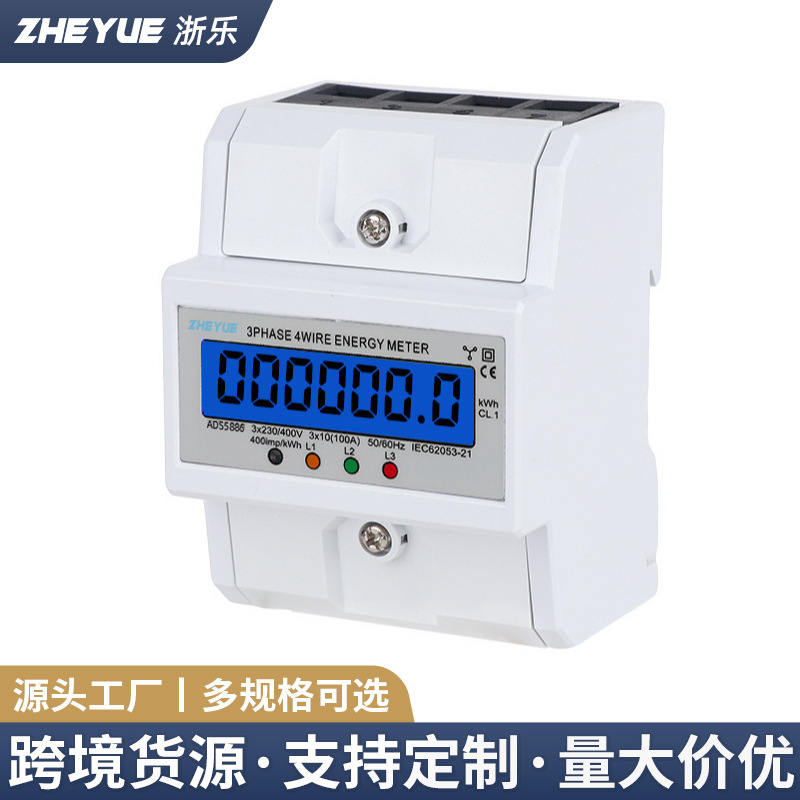
Eastron SDM630 DIN Meter
Billing-quality (MID B+D certified, UL) 3-phase energy meter, up to 100A direct or CT-operated. The answer when the numbers must survive an audit.
3 gotchas
- Electrician install — V taps always; direct variant is fully wired
- CT-operated variant keeps the current side clip-on
- Budget the RS485→IP gateway into the BOM
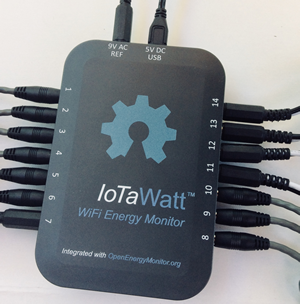
IoTaWatt 14-Channel Monitor
Open-source, open-hardware energy monitor with 14 CT inputs — one box instruments a whole production cell or breaker panel. Project transitioned to community stewardship; CircuitIQ builds current units.
2 gotchas
- One voltage reference tap serves all channels
- Slow sourcing makes it a planned install, not a quick demo

SENPUM Laser Micrometer (LM series)
Laser micrometers for inline diameter/width measurement — sampling down to 150 µs, repeatability to ±3 µm, multi-sensor cascade. The dimensional gate for cable/wire QC at a fraction of Keyence pricing.
1 gotcha
- Also makes laser displacement (LM/CMOS), colour, fibre-optic sensors and light curtains — one vendor covers several sensing needs
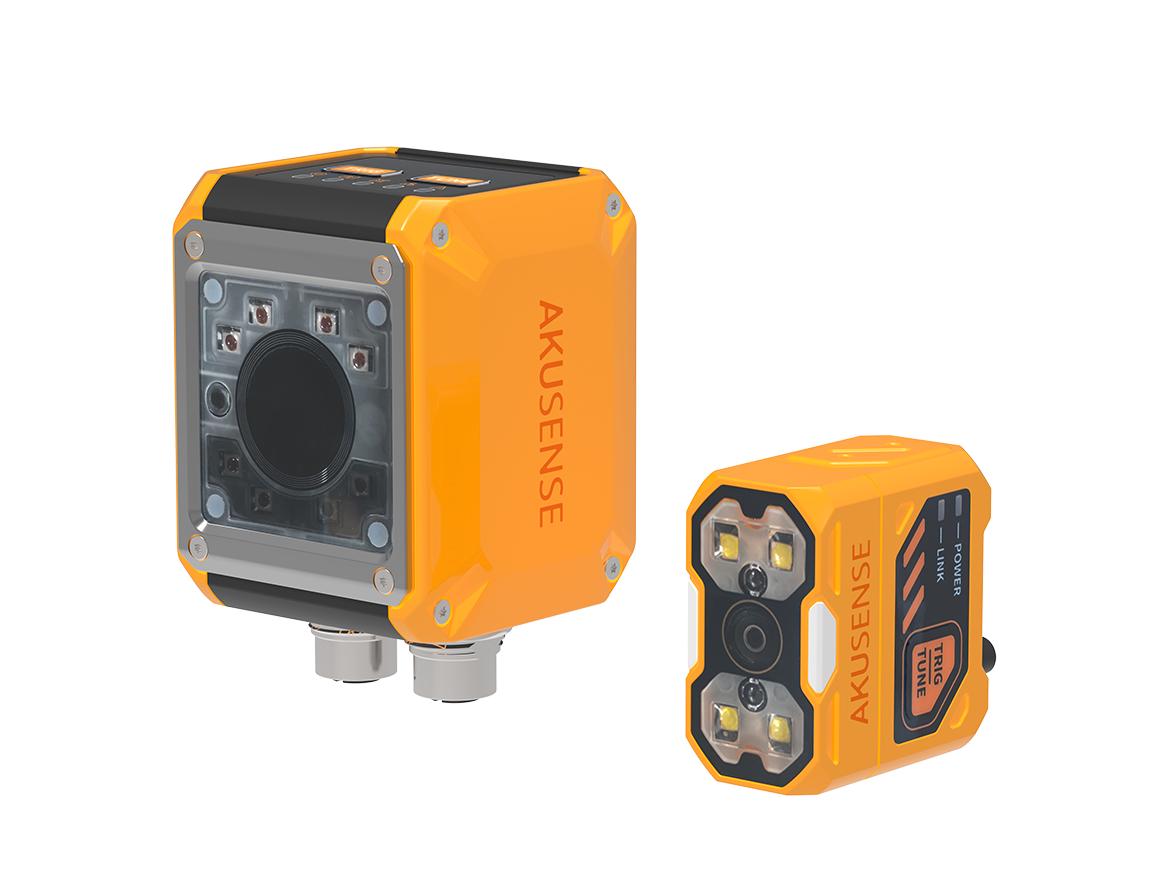
Akusense Vision & LiDAR Sensors
Industrial sensor house — photoelectric, laser displacement, LiDAR scanners, AI vision sensors, code readers. 317+ patents, ISO-certified manufacturing.
1 gotcha
- Which vision sensors run models on-device vs stream raw — key question for edge architectures
Precitec CHRocodile 3D Metrology
Chromatic-confocal point and line sensors — distance and thickness at up to 70 kHz with nanometer resolution. The premium tier when sub-micron matters.
1 gotcha
- Overkill for most cable-jacket QC — the price floor question vs Chinese laser micrometers is the one to settle

Waveshare CSI Cameras (IMX219 / IMX477)
Commodity 8 MP (IMX219) and 12.3 MP (IMX477) MIPI CSI-2 camera modules — the eyes of the QC rig. Jetson Orin Nano drives 3 simultaneously.
2 gotchas
- CSI-2 cable limit ~30 cm — use a GMSL serializer/deserializer pair for longer industrial runs
- Start with IMX219; move to IMX477 only if defect detail demands it

Aux Sensor Kit (Temp / Vibration / Lux / ToF)
The cheap add-ons that ride on any ESP32 node: DS18B20 waterproof temp probes, ADXL345 vibration, BH1750 lux (lighting-consistency watchdog), VL53L0X ToF piece counting.
2 gotchas
- Several DS18B20 probes share one 1-Wire bus
- Keep I²C runs short; stranded wire + ferrules on anything that vibrates
DADISICK Safety Light Curtain
Safety light curtains, measuring light curtains (≤(n+1)×0.1 ms response), laser scanners and safety relays — SICK-class function at Chinese price. Any moving cell eventually needs a safety perimeter.
2 gotchas
- Safety parts need certification review per deployment country — ask for CE/TIS docs
- Safety circuits are the electrician's domain
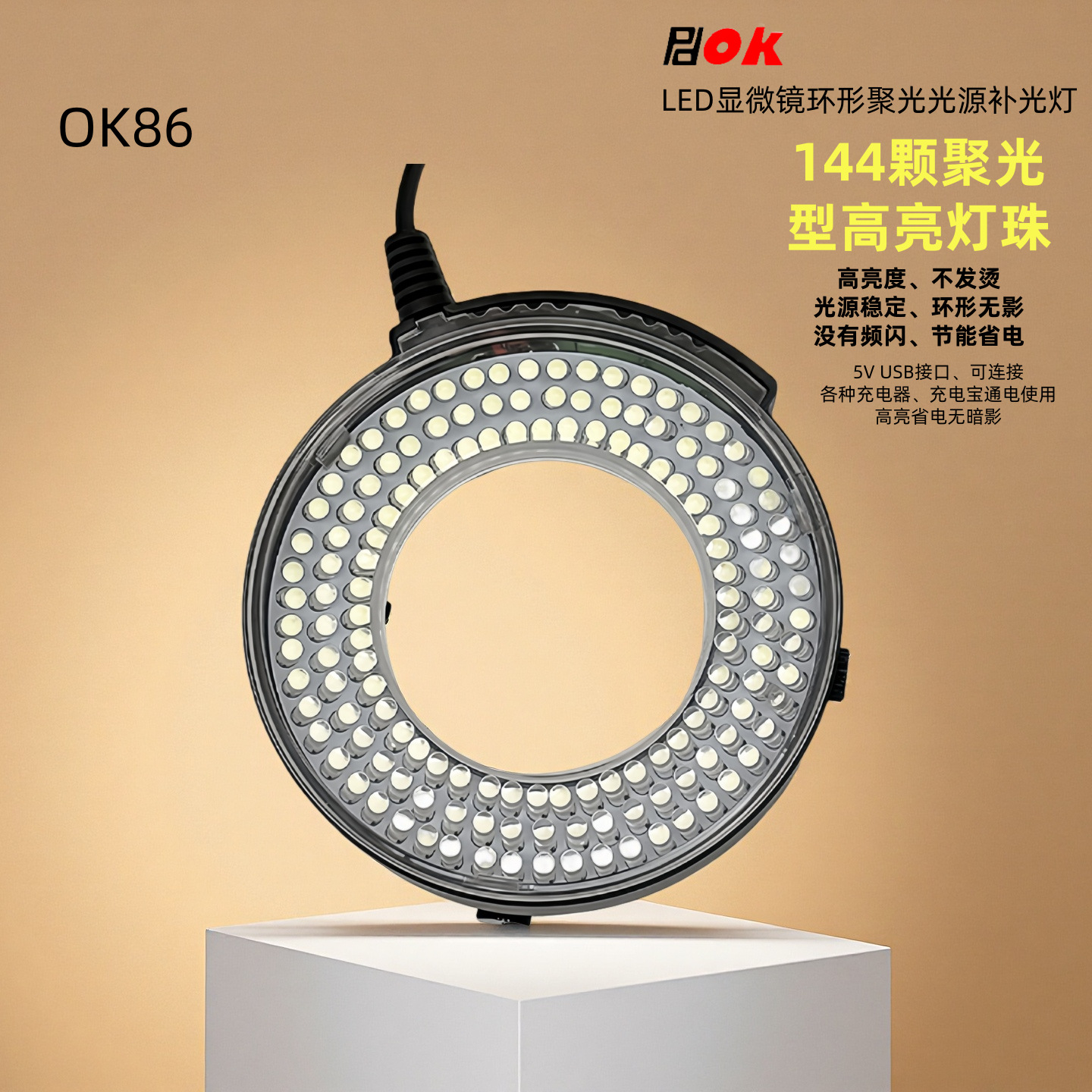
Machine-Vision LED Lighting (diffused + polarized)
Ring / bar / dome LED lights with diffusion and polarization. Reflections on a glossy cable jacket are the #1 image-quality enemy — one diffused, polarized light per camera.
3 gotchas
- Match light geometry to defect type: dome for matte scratches, low-angle for embossing
- Polarizer pairs (light + lens filter) kill specular glare
- Validate on the bench rig before buying multiples
Compute 4

ESP32 Node (WROOM / WT32-ETH01)
The $2–8 sensing brain. WROOM-32 boards for WiFi nodes; WT32-ETH01 adds wired Ethernet for metal-cabinet and PoE installs. ESPHome makes every sensor in this catalog's DIY tier declarative.
3 gotchas
- Idles 80–160 mA but spikes ~500 mA on WiFi TX — size 5 V supplies ≥1 A, add 470–1000 µF on the rail
- VIN wants 4.8–9 V; never feed batteries into the 3V3 pin
- WiFi dies inside metal cabinets — mount outside or use WT32-ETH01

NVIDIA Jetson Orin Nano Super Dev Kit
67 TOPS edge-AI computer at 7–25 W. Runs YOLOv8n INT8 via TensorRT at ~25 fps across 3 CSI cameras — the QC station's inference engine.
3 gotchas
- Passive cooling inside an enclosure needs real thermal design (<25 W system target for PoE+)
- TensorRT engines are JetPack-version-specific — pin versions
- Cascade ambiguous frames to a bigger model instead of upsizing the edge model
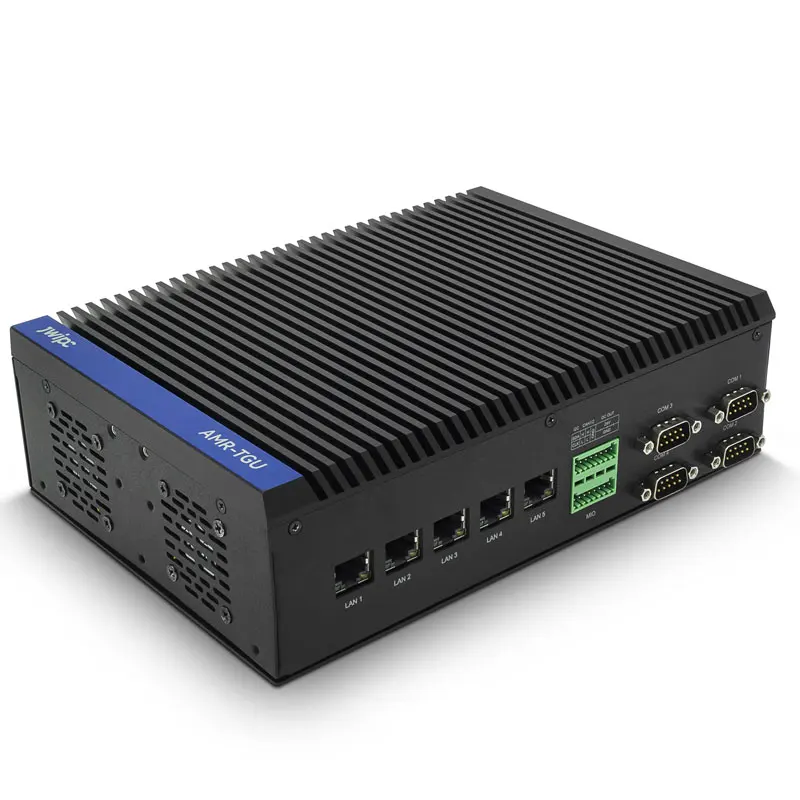
JWIPC Edge-AI Industrial PC
Machine-vision industrial PCs and edge-AI controllers on Intel x86 and Rockchip ARM — the ruggedized, warrantied compute box when a customer won't accept a dev kit.
1 gotcha
- Rockchip NPU toolchain maturity vs TensorRT is the real question — test before committing
Factory GPU Node (Advantech MIC + NVIDIA)
Local edge GPU server — e.g. MIC-770 V3 with NVIDIA L4 (7,424 CUDA cores, 24 GB, 72 W) or MIC-75G30 dual-GPU module. Worthwhile at 10–20+ stations: correlate camera + thermal + vibration + energy locally, and serve as the second-opinion model for edge cascades.
1 gotcha
- Justified by correlation value and cascade latency, not privacy theater — a single edge station pays back on its own
Control 3
Sinsegye Software-Defined Control
PC-based, software-defined industrial computing aiming to replace the traditional PLC / IPC / controller / gateway stack at L0–L2 — plus servo drives and touch monitors. Philosophically the most software-first control vendor at the show.
1 gotcha
- How open is the runtime vs Codesys-based stacks — openness decides whether agents can drive it
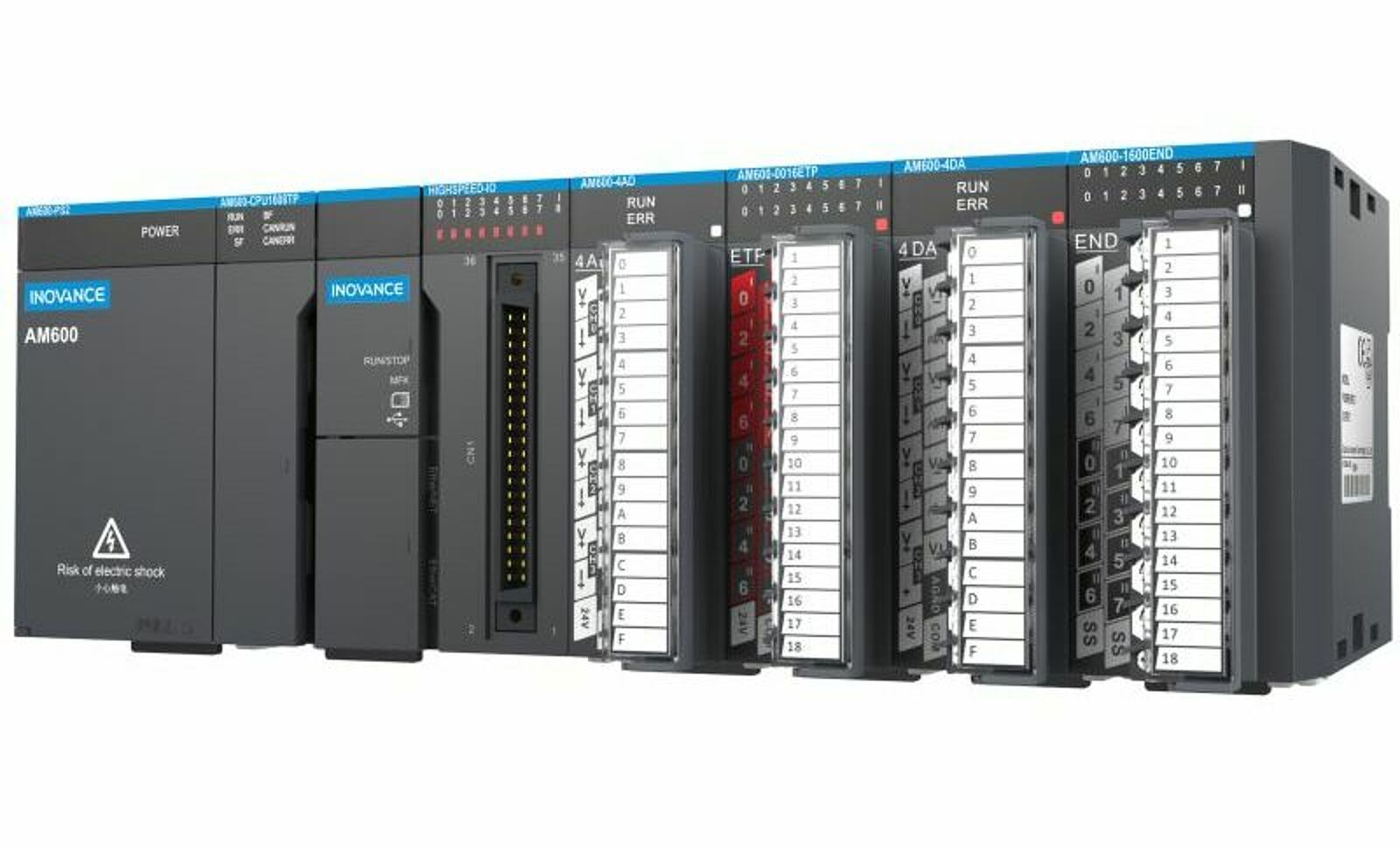
Inovance PLC / Servo / Robot Stack
China's industrial-automation giant: AC drives, AM600 EtherCAT motion controllers (32 axes), servos, HMIs, industrial robots, CNC. The anchor booth — and the benchmark for what full-stack Chinese automation costs.
1 gotcha
- Where their software/action layer stops is the strategic read — boxes are covered, outcomes are not
Weihong CNC & Motion Controllers
CNC and motion control systems (NK105/NK300 controllers, NcStudio software) for router, laser and milling machines — coordinated motion without a full robot.
Act 3
Jodell Electric Grippers
Miniaturized drive-and-control-integrated electric grippers, rotary grippers with built-in servos, electric suction cups — 9+ product series, strong in lab automation. EtherCAT Technology Group member.
1 gotcha
- Price vs Robotiq 2F-85 is the number that matters
MOONS' Stepper & Servo Motors
Global top-3 stepper motor maker (10M+ hybrid steppers/year since 1994) — steppers, step-servos, drives, integrated motors. The motion source for reject flippers, indexing feeds, gantry axes.
CIZON AMRs & AGVs
Industrial mobile robots since 2012 — magnetic, QR, inertial and laser-nav AGVs, forklift and jacking robots, heavy/special AGVs; 25 patents. The intralogistics layer when a recipe extends beyond the cell.
1 gotcha
- An open fleet API would make AMRs an externally-drivable asset class — closed fleet software makes them a silo
Connect 7
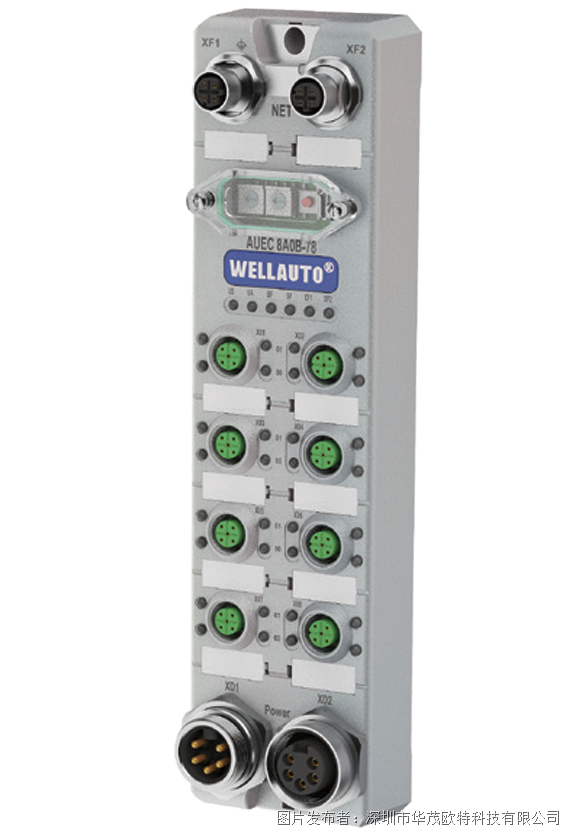
WELLAUTO Remote I/O & IO-Link Masters
Distributed I/O specialist (national 'Little Giant' SME): IO-Link masters AUPN/AUEI/AUEC-8A0B for Profinet / EtherNet-IP / EtherCAT, IP67 field masters, remote I/O — the layer that gets signals off existing machines without touching the PLC program.
1 gotcha
- Per-port IO-Link price and config tooling openness decide whether this beats a Turck quote
ODOT Remote I/O Slices
Remote I/O since 2003: 32 I/O module types (DI/DO/AI/AO, RTD/PT100) behind adapters for Modbus RTU/TCP, Profibus-DP, CC-Link, ProfiNET, EtherCAT, EtherNet/IP, CANopen. Second source to WELLAUTO for brownfield signal acquisition.
1 gotcha
- Modbus TCP adapter + AI modules is the cheapest legal way onto an old machine's signals
Chenzhu Signal Conditioners & Barriers
Isolated barriers, signal conditioners, surge protection, safety relays — 4 categories, 18 series, since 2002. The unglamorous layer that keeps analog signals clean and galvanically isolated.
1 gotcha
- Isolation is cheap insurance wherever a sensor shares ground with a VFD-ridden cabinet

GMSL2 Camera Link (MAX9296 boards)
GMSL2 serializer/deserializer boards carry MIPI CSI-2 camera signals over meters of coax — the fix for CSI's ~30 cm limit. Real market prices run higher than hobby parts: budget accordingly.
3 gotchas
- Serializer (camera side) and deserializer (Jetson side) must be a matched pair
- Check JetPack driver support for the exact board rev before ordering
- At ¥360+/link, only pay for GMSL where the run actually exceeds CSI reach
DEGSON Connectors & Terminals
Global connector maker since 1990 — 40,000+ SKUs across terminal blocks (screw, push-in, spring cage), interface modules, relays, circular connectors. UL/VDE/TÜV certified. Phoenix-Contact class at Chinese price.

WAGO 221 Levers, Terminals & Ferrules
The deployed-wiring standard: WAGO 221 lever connectors and screw terminals as the service interface (mains in, PSU out, sensor bus — everything disconnectable), ferrules crimped on every stranded end.
3 gotchas
- Dupont jumpers vibrate loose on machines — bench only
- 24–22 AWG signals, 20–18 AWG power, stranded for anything that vibrates
- Heat shrink over every joint; label both ends; signal wires away from 220/380 V runs (cross at 90°)
LinkVisu Industrial AIoT & E-Ink Displays
Wireless shop-floor kit: zero-wiring e-ink displays synced to backend data (JIT production, WIP boards), data collection, positioning. Interesting as a cheap physical display surface for live dashboards.
1 gotcha
- The API question decides everything here
Power 3

Hi-Link HLK-PM01 (220 V → 5 V)
Isolated 3 W AC-DC module that lives inside the node enclosure — powers a deployed ESP32 from the machine cabinet. Isolation floats the low-voltage side → safe to touch.
3 gotchas
- Fuse the mains input (1 A); mains side is the electrician's — you own the 5 V side
- Add 470–1000 µF on the 5 V rail for ESP32 WiFi spikes
- Test on USB first, mains last

Mean Well HDR-15-5 DIN PSU
Industrial slim DIN-rail 5 V PSU (HDR series, 100–240 VAC in, plastic housing) — what you spec when the customer's maintenance team will open the cabinet.
2 gotchas
- Same rules as any 5 V feed: fuse input, cap on rail, electrician for mains
- 35 mm DIN rail is the universal cabinet mount

PoE Power Path (802.3af/at)
One Ethernet cable per node carries power AND data. The 10–50 machine answer: no WiFi congestion, no metal-cabinet dead zones, central power — UPS the switch and every node stays up.
2 gotchas
- 802.3af = 13 W at the device; a Jetson QC station needs 802.3at (PoE+, 25 W)
- Budget the Cat6 run per machine (10–30 m)
Structure 2
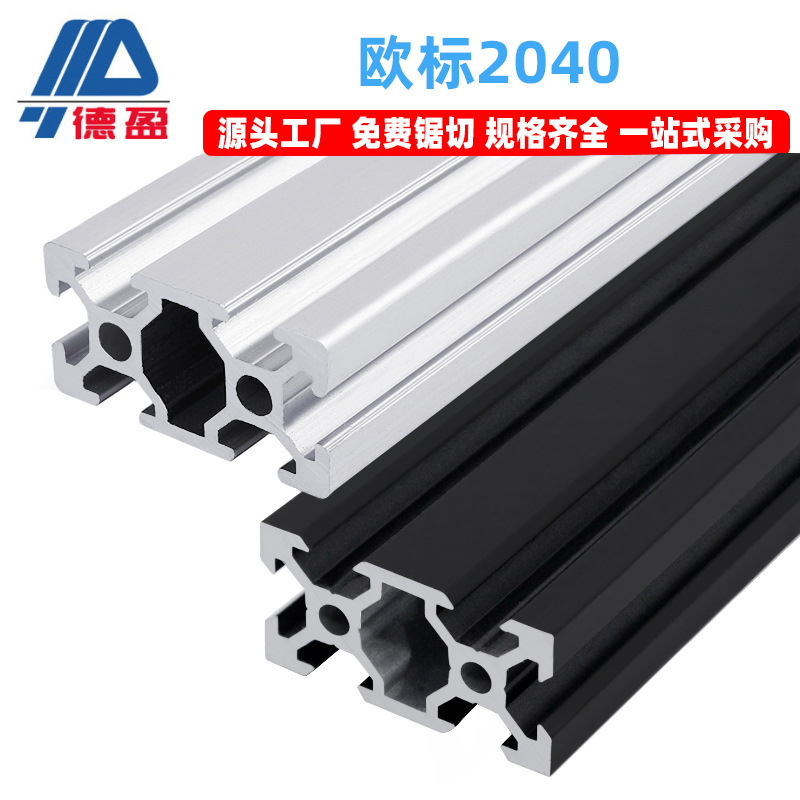
T-Slot Aluminum Extrusion (2040)
The universal machine-frame system. Euro-standard 2040 profile from ¥9.5/m on 1688 — a fraction of branded list — with the full bracket/connector ecosystem.
1 gotcha
- Design rigs to clamp onto existing line structure (T-slot clamps / DIN rail) — not floor-standing frames

IP54 Enclosure + Cable Glands
The deployed node's house: ~115×90×55 mm ABS box with DIN clip, PG7 gland for sensor/CT cable, PG9 for mains — seal and strain relief in one part that costs less than a coffee.
2 gotchas
- Every cable enters through a gland or a zip-tie anchor — wire must never hang on a solder joint
- Cable ties + adhesive mounts inside, spiral wrap outside, label both ends